I was deep in a project, the kind of work I’d been telling myself was the most important thing on my plate. A hard piece of integration. Edge cases, fixes, the whole tangle. I thought I could be ahead of schedule because I was getting so much done. But I was stuck in rabbit holes, trying to perfect things that probably weren’t such good ideas. Just iterating, burning time, the output kept coming and from the inside it looked like progress.
Sometimes I’m so deep in something I lose perspective on whether it’s even what I should be doing.
There’s a particular pressure I didn’t know was there until I started working with AIs. It was a rush at first. So much done, going so fast. But there was also a sense that if I wasn’t asking it to do something I was wasting it. Like hiring someone, and then letting them sit around without anything to do. So that pressure made me work even harder. No breaks, multiple parallel sessions, working on different things at the same time, constantly context-switching. It was mentally exhausting. I felt like I was doing so much. By my old standards I was. The work of two or three people.
Pages of text felt like progress even though the distance to the goal wasn’t actually coming down. The ask-to-action cycle was so short. You ask for something, you get it back in minutes, you iterate on what came back, and somewhere along the way the whole exercise has drifted off course. You’ve been working hard. You’ve produced a lot. You’ve convinced yourself you’re making progress. None of that means you’re any closer to what’s actually needed.
This wasn’t true before AI. When the work was slow, the slowness made you check. You’d type something, the cursor would stop, you’d sit back, and in the gap your brain would ask, is this even the right thing to do. The friction of slow work was also the friction of direction-checking. We didn’t talk about it as a separate thing because it wasn’t a separate thing. It was just how working worked.
With AI the gaps disappear. The work doesn’t slow you down enough to make you check.
There’s a related thing. When we didn’t have AI, time and resources were precious. Using them was thought through carefully, planned, ROIs calculated before committing. Not just go and see where you end up. When the cost of trying drops to nearly zero, that discipline drops with it. Why think hard about whether the idea is worth trying, you can just try it. Pursue the flight of fancy, the output is cheap.
But the flight of fancy still takes your attention, your judgement, your time to evaluate. AI made the trying cheap. It didn’t make the evaluating cheap. The cost just got moved somewhere harder to see.
A while back I wrote about AI dropping the threshold for what was worth building. The small ideas I’d been carrying for years, suddenly cheap enough to act on. That part is still true.
I spent a lot of time on things I would never have started a year ago. Some worth it, others not.
The deeper signal, the one that took longer to register, was a felt thing. My natural intuition was getting swamped. I was being carried along by something instead of using my intuition to navigate. I wasn’t giving myself enough time to sense things. The intuitions, the analysis, the stuff that leads to good navigating.
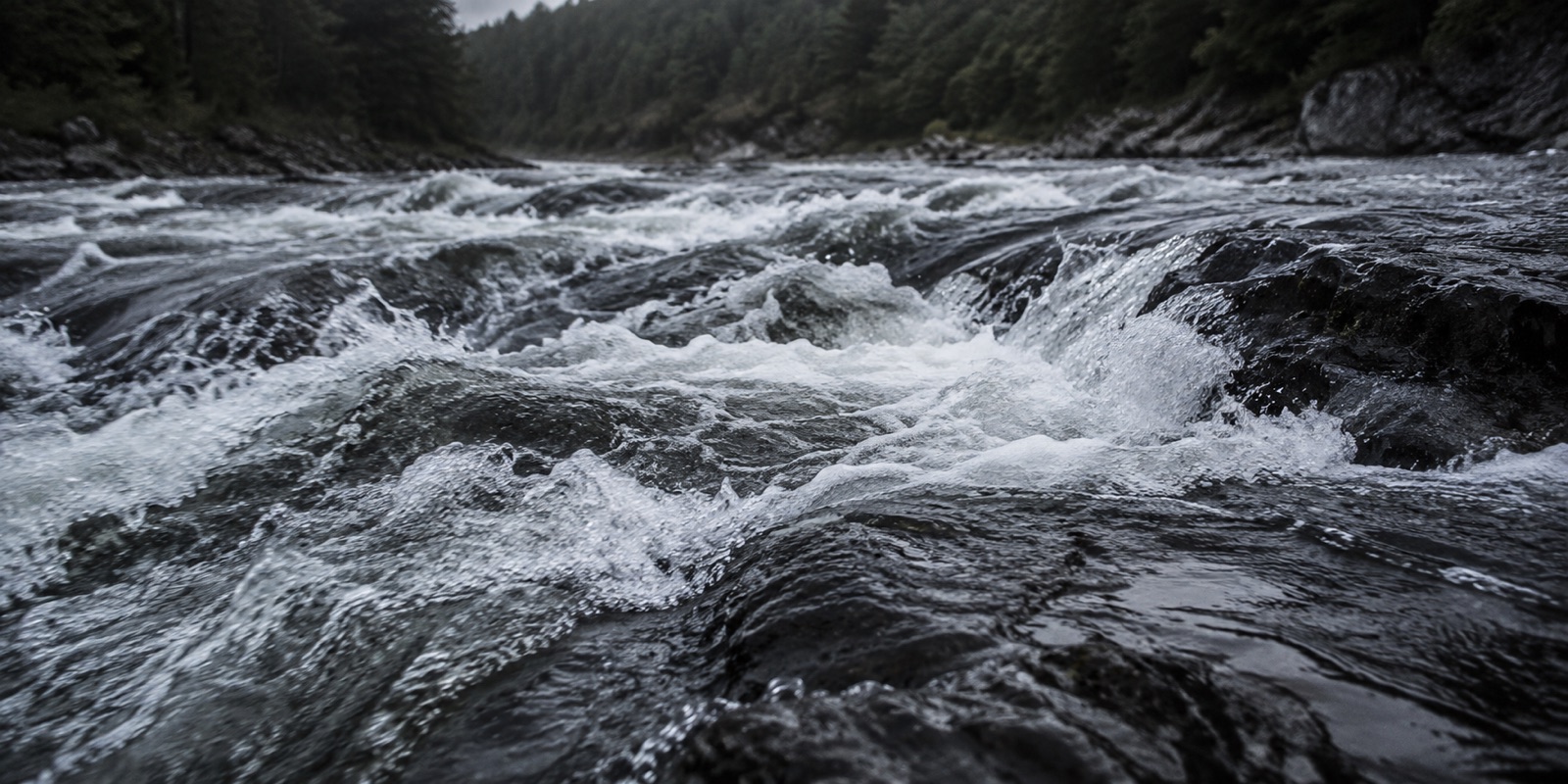
I’d written about flow, or its opposite, the feeling of fighting the current, trying to force the work when it wasn’t there. This was different. I wasn’t fighting the current. I was just being pulled along by it. River rapids. Not steering, not sensing, just trying to stay upright.
Then there was the math.
After about four hours of AI-augmented deep work I’d be as exhausted mentally as if I’d worked all day. Sometimes more. For a while I treated that as a stamina problem, like I needed to build the muscle. But I had it backwards.
There’s research that names this. A 2025 Microsoft study found that as AI confidence in the work goes up, people’s critical engagement goes down — the effort shifts from doing the work to verifying and orchestrating the work. The hard parts get concentrated. The easy parts disappear. The reason this matters isn’t the verification load on its own. It’s that the verification load doesn’t come with the natural breathing rooms that the easy parts used to provide.
So AI hadn’t reduced the cognitive load. It had concentrated it. The low-intensity rhythmic stuff, the typing, the syntax, the boilerplate, the parts of work that used to give the brain a beat to recover inside the workday, all of that was gone. What was left was the System 2 work end-to-end. Orchestrating, judging, deciding, reframing. The hard parts. All of them, back to back, no padding in between.
Four hours of that is a lot of hours.
The exhaustion wasn’t a stamina problem. It was a math problem.
For as long as I’d been working I’d been running a two-phase model. Work, then rest. Push hard, recover, push hard again. It had served me fine for twenty years. It’s probably what most of us were taught, implicitly, by every productivity culture we grew up inside.
But a two-phase model assumes the work itself includes its own checking. That doing the work slowly, with friction, will tell you whether the work is even the right work. Pre-AI that assumption was mostly fine because the friction was built in. Post-AI it isn’t, because the friction is mostly gone.
So the model needed a third phase. Something to do the direction-checking that the friction used to do on its own. Something between executing and resting. A different kind of attention.
I started calling it three-phase oscillation, mostly because I needed something to call it. Execute, direction-check, recover. Three modes, each using a different part of the brain. Each one giving some relief from the one before, and needing the one after to be sustainable.
The two-phase model didn’t fail. It just stopped fitting the world I was working in.
Naming it was the easy part. Applying it was harder.
The rapids were still right there.